If you own a truck in Hicksville or anywhere on Long Island, you have probably noticed how popular lifted pickups have become. A properly designed lift can give your truck more ground clearance, make room for larger tires, improve off-road capability, and create the stance you want.
But lift kit installation is not simply a matter of adding taller springs or bolting spacers above the factory suspension. Changing ride height affects steering, suspension geometry, braking, tire fitment, driveline angles, and even how your truck performs during everyday driving.
Whether you use your truck as a daily driver, tow vehicle, work truck, or weekend project, planning the modification correctly matters. Here is what you should know before changing your truck’s ride height.
Start With Your Truck’s Purpose
Before comparing lift kit brands or shopping for larger tires, decide how you actually use your truck.
A setup that works well for a dedicated off-road vehicle may be uncomfortable, impractical, or unnecessarily expensive for a truck that spends most of its time commuting on the Long Island Expressway. Likewise, a mild leveling kit may not provide enough clearance for the tire size you want.
Think about your priorities:
- Daily comfort and predictable highway handling
- Larger tires and a more aggressive appearance
- Additional ground clearance for trails or job sites
- Towing and hauling stability
- Suspension travel and off-road performance
- A long-term custom or performance build
Your answers help determine whether you need a leveling kit, a complete suspension lift, or supporting upgrades such as control arms, shocks, brake lines, or steering components.
Leveling Kit vs. Suspension Lift Kit
These terms are often used interchangeably, but they describe different modifications.
Leveling Kits
Most trucks sit slightly higher in the rear from the factory to account for cargo and towing loads. A leveling kit raises the front end to reduce that factory rake. Depending on the truck and kit, it may use coil spacers, torsion key adjustments, strut spacers, or replacement springs.
A leveling kit is often a practical choice when you want:
- A more even front-to-rear stance
- A modest ride-height increase
- Room for slightly larger tires
- A lower overall cost than a full suspension system
Even a small height change can affect alignment and suspension angles, so professional installation and post-installation alignment are still important.
Full Suspension Lift Kits
A suspension lift raises the truck more substantially and may include replacement springs, shocks, control arms, steering components, crossmembers, differential spacers, and other geometry-correction parts.
A properly engineered suspension lift is designed as a system. The goal is not only to raise the body but also to keep the truck stable, steerable, and mechanically sound at its new height.
The taller the lift, the more important supporting components become. Installing a high lift without addressing control-arm angles, driveshaft angles, brake-line length, or shock travel can create problems that are expensive to correct later.
Choose Tire Size and Wheel Fitment Before Buying Parts
Many truck owners begin with a lift height and choose tires afterward. In practice, the desired tire and wheel combination should be part of the plan from the beginning.
Tire diameter is only one part of fitment. Tire width, wheel offset, backspacing, fender design, suspension travel, and steering angle all affect whether the tire clears the truck.
A tire that fits while the truck is parked may rub when:
- The steering wheel is turned to full lock
- The suspension compresses over a pothole
- The suspension reaches full droop
- The truck is carrying passengers, tools, or cargo
- The wheels and tires are mounted with a different offset
Rubbing can damage tire sidewalls, fender liners, brake lines, and suspension components. It can also create handling problems if the tire contacts the body during a turn.
Before ordering parts, have the complete combination reviewed: lift height, tire dimensions, wheel width, offset, intended load, and driving conditions. That approach helps you avoid paying for components that do not work together.
Ride Height Changes Suspension Geometry
Your truck’s suspension is designed to operate within a specific range of angles. Raising the vehicle changes the position of the control arms, tie rods, steering knuckles, CV axles, and other parts.
If those angles are left too far from their intended operating range, you may experience:
- Steering that feels loose or wanders
- Uneven or rapid tire wear
- Increased stress on ball joints and tie rods
- CV axle vibration or premature wear
- Reduced suspension travel
- A harsh or unsettled ride
- Difficulty maintaining a straight path on uneven roads
This is why a quality lift kit installation may require more than springs or spacers. Depending on the truck, the installation may include geometry-correction components, upgraded shocks, adjustable control arms, differential spacers, or extended brake and ABS wiring.
At All Out Motorworks, our team can review the complete suspension setup rather than treating the lift as an isolated modification.
Alignment Is Part of the Installation
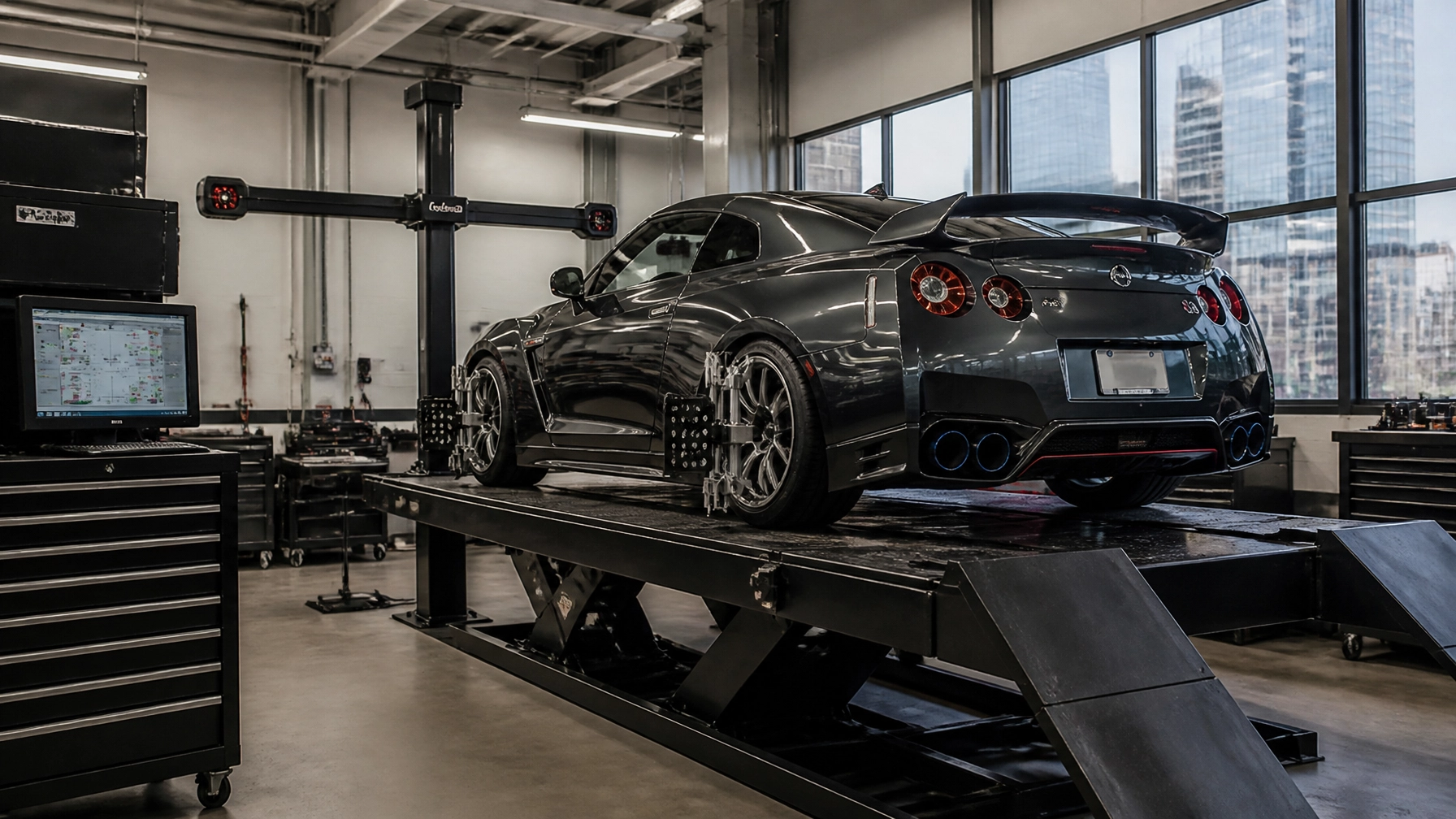
A wheel alignment should be considered part of the lift installation: not an optional service to schedule later.
Changing ride height affects camber, caster, and toe. These settings determine how the tires contact the road, how the truck tracks, and how evenly the tires wear. Even if the steering wheel appears centered after installation, the alignment may still be outside the appropriate range.
A professional alignment helps address:
- Steering pull or wandering
- Crooked steering-wheel position
- Premature inner or outer tire wear
- Reduced highway stability
- Poor tire contact during braking and cornering
The truck may also need a follow-up inspection after the suspension settles. Fasteners, bushings, and other components should be checked and torqued correctly according to the vehicle and component manufacturer’s specifications.
You can learn more about why alignment matters in our guide to the benefits of professional wheel alignment for performance builds.

Do Not Overlook Brakes, ABS Wiring, and Driveline Components
A lift changes the relationship between the wheels, axles, frame, and body. During installation, the shop should inspect more than the visible ride height.
Important checks include:
Brake Lines and ABS Wiring
Brake hoses and ABS wiring need enough length and flexibility throughout the suspension’s full range of movement. If a line is stretched, kinked, or routed too close to a moving component, it can fail or become damaged.
Driveshaft and CV Axle Angles
On four-wheel-drive and all-wheel-drive trucks, raising the suspension can change driveshaft and CV axle angles. Excessive angles may lead to vibration, premature wear, or reduced joint life.
Steering and Track Alignment
The steering linkage must operate without binding, and the front and rear axles should remain properly positioned. Some lift designs require additional parts to maintain correct tracking and steering behavior.
Shock Travel
Shocks must match the new ride height and intended use. A factory shock may not provide the correct travel or damping for a substantially lifted truck. The wrong shock can produce a bouncy ride, topping-out noises, or poor control over uneven roads.
These details are easy to miss when a lift is selected based only on appearance. They are also the reason professional installation is usually a better value than correcting an incomplete or mismatched setup later.
Consider New York Inspection Requirements
A lifted truck still needs to meet applicable New York safety and emissions requirements. Modifications do not remove the need for a proper inspection, and an improperly installed suspension can create inspection concerns.
Before committing to a lift, review the current New York State inspection requirements and discuss the proposed setup with a qualified shop. Pay particular attention to:
- Brake performance and component condition
- Steering and suspension integrity
- Tire condition and safe clearance
- Lighting and license-plate visibility
- Emissions equipment
- Securely mounted suspension hardware
- Excessive rubbing or interference
Requirements can change, and the exact outcome depends on the vehicle and modification. Planning around inspection requirements before installation is much easier than discovering a problem afterward.
All Out Motorworks provides New York State inspections in Hicksville, along with suspension repair, wheel alignment, diagnostics, and other automotive services.
Avoid the Cheapest Incomplete Setup
A low price does not always mean a good value. Some kits appear affordable because they do not include the components needed to keep the suspension working correctly at the new height.
Ask what the installation estimate includes:
- Lift components and hardware
- Shocks or struts
- Control arms or geometry-correction parts
- Alignment
- Tire and wheel fitment checks
- Brake-line and ABS-wire inspection
- Driveline-angle inspection
- Road testing
- Post-installation torque or safety check
A transparent shop should explain what your truck needs, what it does not need, and why. You should also understand how the modification may affect ride quality, tire life, towing behavior, maintenance, and future repairs.
Is a Lift Kit Right for Your Long Island Truck?
A lift kit can be a worthwhile upgrade when it matches your truck, tires, driving habits, and budget. For many Long Island owners, a moderate, well-aligned setup offers the best balance between appearance, clearance, comfort, and reliability.
The safest process is straightforward:
- Define how you use the truck.
- Choose your target tire and wheel combination.
- Select a lift designed for your specific make and model.
- Identify required supporting components.
- Confirm clearance and inspection considerations.
- Complete a professional installation and alignment.
- Recheck the system after the initial break-in period.
The right lift kit should make your truck more capable: not make it harder to steer, stop, maintain, or inspect.
Plan Your Lift Kit Installation in Hicksville
If you are considering a leveling kit, suspension lift, larger tires, or a complete truck performance build, talk with the team at All Out Motorworks before ordering parts. We will explain your options, work within your budget, and help you avoid mismatched components and unnecessary shortcuts.
Our full-service repair and performance shop in Hicksville handles suspension modifications, wheel alignments, fabrication, brake upgrades, and other work needed to support a properly built truck.
Request an appointment or call All Out Motorworks at (516) 743-9800 to discuss your lift kit installation and make a plan that is safe, practical, and built for the way you drive.